Biochar” Emerges as a Sustainable Solution to Stubble Burning
3 min read
AKS University Students Present Innovative Model for Agricultural Waste Management
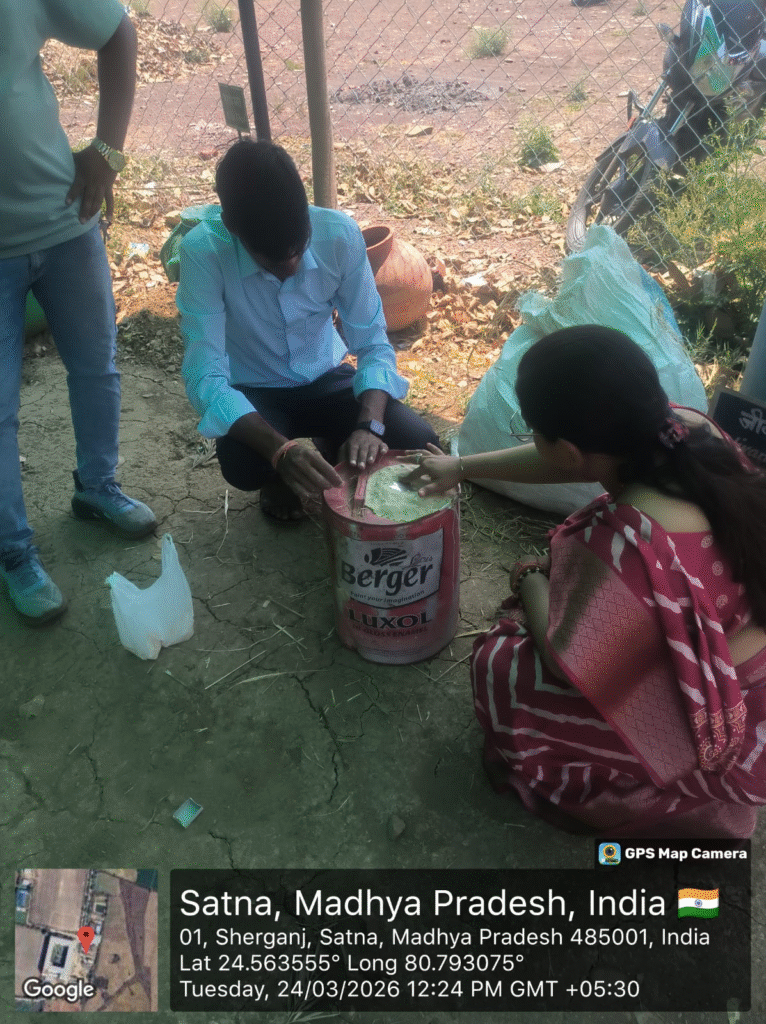
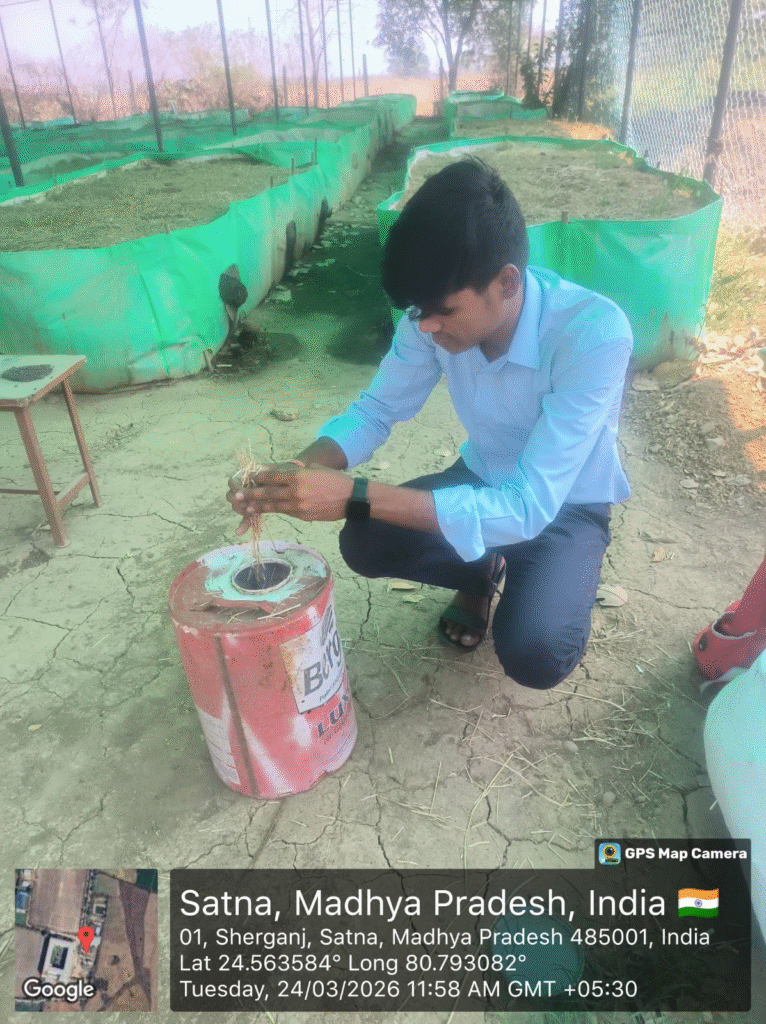
Satna. The management of agricultural residues, especially paddy straw, has become a serious challenge across the country. Amid rising air pollution, declining soil quality, and adverse health impacts caused by stubble burning, “Biochar” is emerging as an effective and eco-friendly solution. In this direction, B.Sc. (Hons.) Agriculture 8th semester students of AKS University, Satna, Shubham Umrethe and Atul Umrethe, developed a biochar production model using a biogas drum under the subject of Agricultural Waste Management, marking a commendable step toward sustainable agriculture. The work was carried out under the guidance of Dr. Sugyata Shivhare, Head of the Department of Soil Science.
Biochar is a carbon-rich material produced by heating paddy straw, wheat husk, rice husk, wood chips, and other agricultural residues in a low-oxygen environment. This process is known as “Pyrolysis.” During this process, the biomass does not burn completely into ash but transforms into a stable charcoal-like carbon material. The resulting biochar is later used in agricultural fields as a soil amendment.
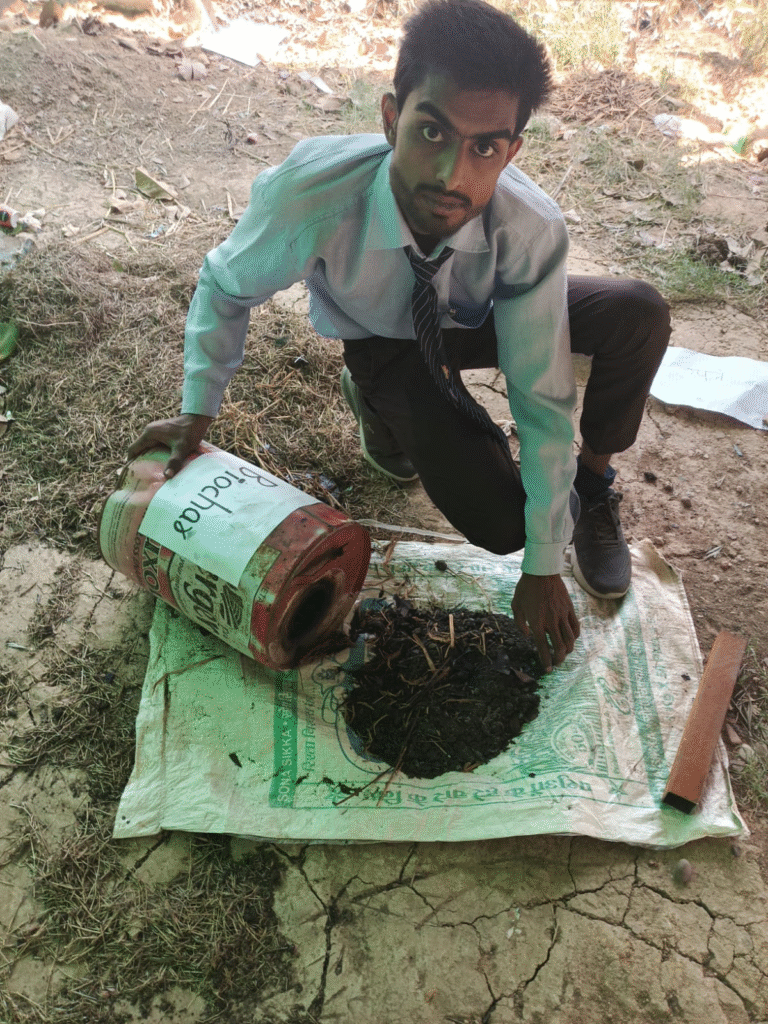
In the model prepared by the students, agricultural waste was first collected and dried to reduce moisture content. The dried biomass was then heated in a metal drum at a controlled temperature under limited oxygen conditions. Since complete combustion did not occur, the agricultural residues were converted into carbon-rich biochar. It was later cooled in an oxygen-free environment and crushed into smaller pieces for easy application in fields.
According to experts, biochar contains nearly 70 to 90 percent stable carbon, which helps in long-term carbon sequestration in soil. It also contains essential nutrients such as nitrogen, phosphorus, potassium, calcium, magnesium, and other micronutrients. Its porous structure enhances the soil’s water-holding capacity and nutrient retention ability, enabling plants to receive nutrition over a longer period and thereby improving crop productivity.
Biochar also plays a significant role in improving soil health. It enhances soil structure, stimulates microbial activity, and makes nutrient-deficient and degraded soils more fertile. Its application reduces dependence on chemical fertilizers and lowers agricultural production costs.
In many parts of the country, stubble burning has become a major environmental concern. Burning crop residues releases harmful gases such as carbon dioxide, carbon monoxide, and fine particulate matter (PM2.5), contributing to smog and respiratory diseases. It also destroys beneficial soil microorganisms and wastes valuable nutrients present in the straw. In such circumstances, biochar technology offers farmers a practical and long-term solution.
By converting paddy straw into biochar, farmers can not only reduce air pollution but also enhance soil fertility and improve long-term agricultural productivity. In the future, biochar production and carbon credit opportunities may also provide farmers with additional sources of income.
The students and the department expressed heartfelt gratitude to Engineer Anant Kumar Soni, Pro Chancellor, AKS University Satna; Dr. A.K. Bhowmik, Dean, Faculty of Agriculture; and Dr. Neeraj Verma, Director of Research, for their support, guidance, and continuous encouragement in this innovative work.
About The Author

 Subscribe to my channel