Unity in Diversity: The Enduring Strength of a Nation
3 min read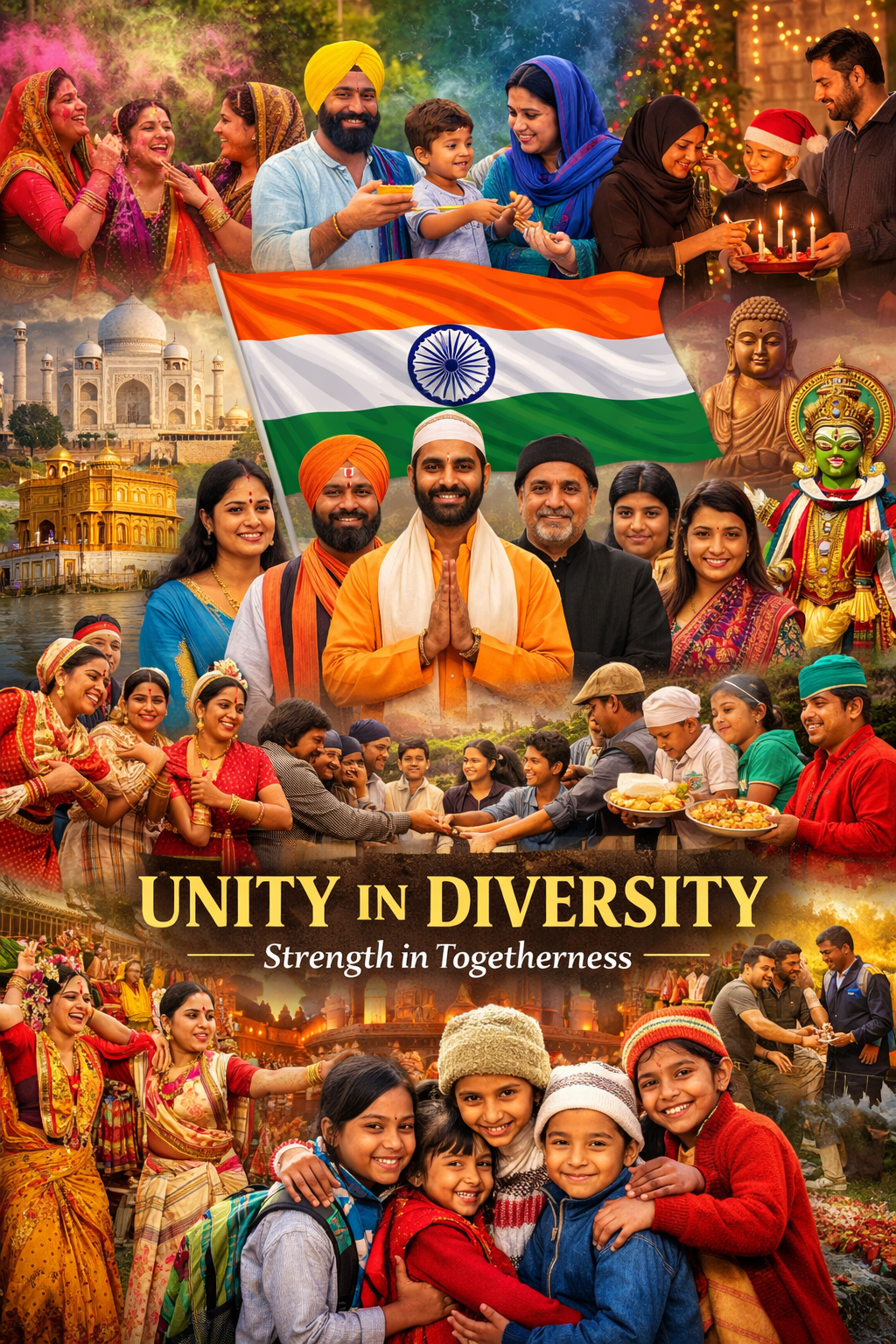
A nation’s true identity is not forged by uniformity, but by its ability to harmonize differences. India stands as a living testament to this truth. With its countless castes, languages, traditions, and civilizations, the country represents a rare mosaic of human coexistence. What makes this diversity remarkable is not its scale, but the enduring unity that binds it together.
Across the length and breadth of the nation, people speak different languages, follow diverse customs, and celebrate distinct traditions. Each region carries its own historical legacy, social practices, and cultural expressions. Yet, despite these visible differences, there exists an invisible thread of shared values—mutual respect, coexistence, and collective responsibility—that unites the people as one nation.
Festivals play a defining role in nurturing this unity. In India, celebrations are not confined within religious or social boundaries. Diwali illuminates homes beyond faith, Eid spreads the message of compassion and charity across communities, Christmas symbolizes love and peace for all, while Holi breaks social barriers with colors of equality. Regional festivals such as Pongal, Baisakhi, Onam, and Navratri further strengthen social bonds by inviting participation from every section of society. These festivals serve as powerful reminders that joy multiplies when shared collectively.
The nation’s linguistic diversity is equally significant. Hundreds of languages and dialects coexist, reflecting the depth of its cultural heritage. While languages may differ in form and sound, the emotions they convey—hope, unity, sorrow, and celebration—remain universal. This linguistic plurality does not divide the nation; rather, it enriches its democratic and cultural fabric.
Caste and community differences, which once posed challenges to social harmony, are increasingly being addressed through education, awareness, and constitutional values. The growing emphasis on equality, social justice, and inclusion reflects the nation’s resolve to rise above historical divisions. Unity does not demand sameness; it demands understanding and acceptance.
In moments of national celebration as well as crisis, the spirit of unity becomes most visible. Natural disasters, pandemics, and moments of collective grief have repeatedly shown that humanity transcends all social and cultural barriers. People come together to help one another, reaffirming faith in shared national values.
In a world increasingly divided by identity and ideology, India’s example offers a vital lesson: diversity, when respected and embraced, becomes a source of strength rather than conflict. The coexistence of varied civilizations within a single national framework is not accidental; it is the result of centuries of dialogue, tolerance, and cultural exchange.
As the nation progresses toward the future, preserving this unity amid diversity remains both a challenge and a responsibility. Development must go hand in hand with social harmony. Only when every citizen feels respected, included, and heard can the nation truly advance.
In conclusion, the festivals, languages, traditions, and shared human values of diverse communities collectively shape the soul of the nation. Unity in diversity is not merely an ideal—it is the foundation upon which the nation stands and the path that leads it forward.
About The Author

 Subscribe to my channel